Best Wreck Diving in Europe: Ranked Sites and Depths
Best wreck diving in Europe ranked by popularity: Zenobia, Scapa Flow, Um El Faroud, Baron Gautsch, and more — with depth, licence, and Mediterranean notes.
Best Wreck Diving in Europe: Ranked Sites and Depths
The best wreck diving in Europe, if you go by how often names appear in dive magazines and centre itineraries, is a short, repeatable list: Zenobia, Scapa Flow, Malta’s tankers and patrol boats, a Croatian liner, a Corsican bomber, a French cargo in the deep blue off Hyères. That is popularity, not a quality score.
This ranking is a top 10 by how often these wrecks are written about and sold as trips, with depth and a typical licence for each. Cyprus is included because dive media treats MS Zenobia as a European wreck. Donator is Hyères, not Corsica. For the skill of wreck diving itself, see the wreck diving hub.
How This Ranking Works
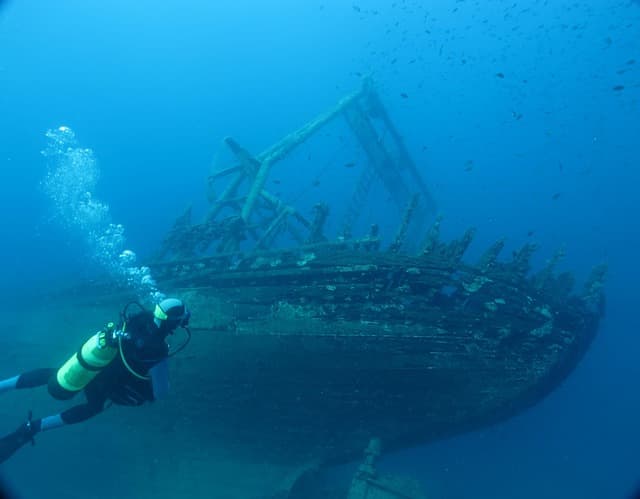 Image by Martin Str
“Best” here means visibility in the diving press and on European trip menus. Zenobia and Scapa appear constantly. A quiet Baltic schooner that local clubs love may be a better dive for you and still sit outside this ten.
Depths are the ranges divers actually use, not the deepest scrap of metal on a survey. Licences use PADI recreational language: Open Water 18 m, Advanced Open Water 30 m, Deep specialty 40 m. French N2 is the rough local equivalent of 40 m recreational; N3 is 60 m. Technical trimix is its own column.
War graves (Baron Gautsch, much of Scapa, Britannic, many Normandy wrecks) are dived as memorials. No souvenirs, no interior trophy hunting.
Mediterranean wreck diving gets its own section below the table because so much of this list is Med water: warmer, often clearer than Orkney, and a different season to the Baltic.
The Top 10 European Wreck Dives
| Rank | Wreck | Where | Depth | Typical licence |
|---|---|---|---|---|
| 1 | MS Zenobia | Larnaca, Cyprus | 16–42 m | OW rail / AOW proper |
| 2 | Scapa Flow (German High Seas Fleet) | Orkney, Scotland | 12–47 m | AOW + drysuit |
| 3 | Um El Faroud | Malta | 15–36 m | AOW |
| 4 | Baron Gautsch | Rovinj, Croatia | 28–40 m | AOW |
| 5 | B-17 Flying Fortress | Calvi, Corsica | ~28 m | AOW |
| 6 | HMS Maori | Valletta, Malta | 14–18 m | OW |
| 7 | Le Donator | Hyères, France | 35–51 m | AOW + Deep / French N2 |
| 8 | P29 | Mellieħa, Malta | 12–35 m | OW superstructure / AOW sand |
| 9 | HMHS Britannic | Kea, Greece | 110–120 m | Technical trimix only |
| 10 | SS Rosslyn / Gibraltar wrecks | Gibraltar | ~23 m (Rosslyn); destination also has OW wrecks | AOW for Rosslyn; OW sites exist |
Ranks 1–8 are recreational if you pick the right part of the wreck. Rank 9 is not. Rank 10 is a destination as much as a single hull: Gibraltar is a wreck-dense harbour, and Rosslyn is the name that surfaces most often in English-language lists.
Mediterranean Wreck Diving
Most of this top 10 sits in the Mediterranean or in water divers mentally group with it (Cyprus). That is not an accident. The Med has clear summer windows, a long coast, two world wars of traffic, and a habit of scuttling ships as dive sites (Um El Faroud, P29, and others).
Compared with the Red Sea, Med wrecks usually wear less coral and more encrusting growth, net, and silt. Compared with Scapa or the Baltic, they are warmer. You can often wreck-dive in a wetsuit in high summer in Malta, Cyprus, Croatia, and Corsica. Hyères’ Donator at 35–51 m is a different thermal and gas problem even in August.
Season matters. Alexandria’s deeper wrecks, for example, are a summer-and-calm-sea product; winter Mediterranean swell shuts small boats. Croatia and Malta have longer recreational seasons but still cancel for bora or gregale. Do not plan a single-day “must dive Baron Gautsch” weekend without a buffer.
If you want Mediterranean wrecks that are not in the top 10, Alexandria’s steel and the French and Italian coasts are the next conversation — covered later in this article.
Notes on Each of the Top 10
1. MS Zenobia, Larnaca. A 1980 ro-ro ferry on her side. Shallow rail around 16 m for a conservative Open Water look; trucks, holds, and the hull down to 42 m for Advanced and Deep. Huge, usually good visibility, wreck-training required for interiors. Full guide: Zenobia wreck diving in Cyprus.
2. Scapa Flow. The German High Seas Fleet scuttled in 1919, plus other losses. Depths from relatively shallow blockships and lighter wrecks (~12 m) to battleships in the 30–47 m range. This is cold water. A drysuit and real Advanced (often Deep) experience are the practical entry, not a tropical AOW card used once. Tidal planning is everything. Treat the war dead with the same rules as any naval grave. Scapa Flow wreck diving.
3. Um El Faroud, Malta. A scuttled tanker, upright, about 15–36 m. One of Europe’s most photographed recreational wrecks. Advanced is the honest licence for a full tour. Um El Faroud wreck, Malta.
4. Baron Gautsch, Rovinj. An Austro-Hungarian passenger steamer that hit a mine in 1914. About 28–40 m. She is a war grave. AOW at the shallow end; Deep if you work the sand. Penetration without wreck training is inappropriate here even by the usual standard — it is also a memorial. Baron Gautsch wreck, Croatia.
5. B-17 Flying Fortress, Calvi. A WWII bomber in roughly 28 m off Corsica. Compact, atmospheric, Advanced. Aircraft wrecks silt and cut; stay outside the fuselage unless you are wreck-trained and the airframe is open. B-17 Flying Fortress, Corsica.
6. HMS Maori, Valletta. A Tribal-class destroyer in 14–18 m in Malta’s Grand Harbour approaches. This is the Open Water wreck on the list: a genuine warship you can dive without going to 30 m. Still a war grave. Still no souvenirs. Guide: HMS Maori wreck, Malta.
7. Le Donator, Hyères (not Corsica). A cargo ship off Porquerolles / Hyères, France, commonly 35–51 m. The photogenic bits live deep. Recreational divers with Deep (or French N2) can work the upper wreck; 51 m is beyond the 40 m recreational ceiling and needs technical or N3-type training. Do not confuse this wreck with Corsican sites. Le Donator wreck, Hyères.
8. P29, Mellieħa / Ċirkewwa, Malta. A former minesweeper / patrol boat scuttled as a dive site, about 12–35 m. Open Water divers can enjoy the superstructure; Advanced divers can drop to the sand and propeller. Pair her with Um El Faroud, Rozi, and Gozo's Karwela using our Malta wreck diving guide and P29 wreck guide.
9. HMHS Britannic, Kea. Titanic’s sister, a hospital ship mined in 1916. 110–120 m. Technical trimix only. No recreational “touch the railing” version exists. If you are not already in a trimix team with the right boat, this is a documentary, not a booking. Britannic wreck diving, Greece.
10. Gibraltar, including SS Rosslyn. Rosslyn is often listed around 23 m (Advanced). Gibraltar as a destination also offers shallower wrecks and harbour sites some Open Water divers can use. Conditions can be tidal and busy with shipping. Start with Gibraltar wreck diving.
Depth, Training, and How to Read the Table
Open Water divers are not locked out of European wreck diving. HMS Maori, the top of P29, the Zenobia rail on a kind day, and some Gibraltar sites are honest 18-metre dives. That is enough for a first wreck trip if you stay outside.
Advanced Open Water is the licence that makes this list usable: Um El Faroud, Baron Gautsch’s roof, the B-17, much of Scapa’s lighter wrecks, Rosslyn, Zenobia’s working depths. Add a drysuit course before Scapa, not after you shiver through the first dive.
Deep specialty (40 m) or local N2 is what you want before you promise yourself Donator’s decks or Baron Gautsch on the sand. Recreational air still stops at 40 m. Deeper is technical.
Wreck specialty (PADI) or SSI Advanced Wreck is what you want before any interior, including Zenobia’s garages and Faroud’s tanks. Popularity of a wreck does not relax that rule.
War Graves, Rules, and Souvenirs
Several wrecks in this ten are graves. Baron Gautsch, Britannic, HMS Maori, and the Scapa warships (and many other Scapa losses) involved deaths. Dive them as memorials. Do not pocket china, brass, or “just a tile.” Malta, France, the UK, Croatia, and Greece all have heritage and salvage law; “everyone takes a bottle” is not a defence.
Even scuttled wrecks (Faroud, P29) were sunk as reefs. Stripping them is vandalism. Photograph, hover, leave.
If a centre’s marketing is “we go inside every time” and you do not have wreck training, pick another centre. The ranking above is not an instruction to penetrate.
Beyond the Top 10
Europe is denser with wrecks than any magazine top 10. These are worth planning time for if you already like the list above.
- Madeirense wreck, Porto Santo — a Portuguese / Madeira-area wreck trip, warmer Atlantic rather than Med.
- Alcione C, Corsica — another Corsican wreck beside the B-17, useful if you are already in Calvi.
- Stuka Ju 87, Croatia — a small, famous aircraft wreck; Advanced depths, fragile airframe.
- Francesca da Rimini — a named spoke for divers following Italian / Adriatic wreck itineraries.
- Le France, Lake Annecy — freshwater, altitude considerations, a different logistics problem to saltwater wrecks.
- Normandy D-Day wrecks — landing craft, tanks, and ships off the invasion beaches; cold, tidal, historically heavy, mixed recreational and technical.
- Wreck diving in Alexandria — WWI and WWII steel in the Egyptian Med, generally 30–45 m, summer window, Advanced / technical.
- Baltic Sea diving off Estonia — preserved wooden and steel wrecks in cold, low-salinity water; drysuit country, not a Zenobia substitute.
Scapa remains the cold-water benchmark; the Baltic is the preservation benchmark. They are not interchangeable with Malta.
When to Go and What to Book
Malta, Cyprus, Croatia, and Corsica are summer-into-autumn recreational wreck trips for most northern Europeans. Orkney is a shorter, colder season; drysuit fitness matters more than the month on a calendar. Hyères’ Donator is a deep dive year-round in theory and a weather-and-gas dive in practice. Gibraltar can be dived much of the year but is tide-dependent.
Book the wreck to the card you hold, then the country. A week of Malta (Maori, P29, Faroud) is a more coherent Open-to-Advanced trip than mixing Britannic marketing with an 18-metre qualification. Add a wreck specialty on the same week if the centre runs it on Faroud or P29 — that is a better souvenir than a tile.
Nitrox is worth having for 30-metre wrecks. It does not make 42 m Zenobia sand an Open Water dive.
Final Thoughts
The best wreck diving in Europe, by popularity, is Zenobia, Scapa, Malta, a Croatian liner, a Corsican B-17, Donator off Hyères, and then the outliers: Britannic for trimix teams and Gibraltar as a wreck harbour. Use the table to match depth to Open Water, Advanced, Deep, or technical. Use the Mediterranean section to remember that “Europe” here is mostly clear, seasonal, salt water — with Scapa and the Baltic as the cold exceptions.
Stay outside without wreck training. Leave graves alone. If you want the next names after the top 10, Madeirense, Alcione C, the Stuka, Francesca, Annecy’s Le France, Normandy, Alexandria, and Estonia’s Baltic wrecks are the honest continuation — not a secret eleventh slot on the same magazine list.
Frequently Asked Questions
- What is the best wreck dive in Europe?
- By how often it is written about, MS Zenobia off Larnaca is usually first, then Scapa Flow’s German fleet and Malta’s Um El Faroud. That is popularity, not a score of which wreck is ‘better’ for your certification or the weather that week.
- Can Open Water divers wreck dive in Europe?
- Yes. HMS Maori (14–18 m), the superstructure of P29, a conservative look at Zenobia’s rail, and some Gibraltar sites fit Open Water if you stay outside. Most of the famous list still wants Advanced Open Water.
- Is Britannic a recreational wreck?
- No. HMHS Britannic off Kea lies at about 110–120 m and is technical trimix only. There is no Open Water or Advanced version of that dive.
- Where is Le Donator — Corsica or Hyères?
- Hyères / Porquerolles, France, not Corsica. Depth is commonly 35–51 m, so Advanced plus Deep (or French N2) for the upper wreck, and technical or N3-type training if you plan the deepest parts.
- Is Cyprus counted as Europe for wreck diving?
- Dive magazines and trip operators almost always include Zenobia in European wreck lists. This ranking follows that convention even though Cyprus is geographically eastern Mediterranean.
- Do I need a drysuit for European wrecks?
- For Scapa Flow and Baltic wrecks off Estonia, yes in practice. Malta, Cyprus, Croatia, and Corsica in summer are often wetsuit dives. Donator at 35–51 m is cold enough at depth that extra exposure still matters.
Related articles
- Wreck Diving: Complete Wreck Diver Guide, Training & Best Sites
What is wreck diving and how do you become a wreck diver? Learn exterior vs penetration rules, PADI/SSI courses, essential wreck gear, and where to start.
- Malta Wreck Diving: Best Shipwrecks in Malta & Gozo by Depth
Explore the best Malta wreck diving sites across Malta, Gozo, and Comino: from 14m Open Water shore wrecks like HMS Maori to P29, Um El Faroud, and Karwela.
- MS Zenobia Wreck Diving in Cyprus: Depths and Guide
Dive the MS Zenobia off Larnaca: a 172 m ferry on her port side, trucks still chained, from 16 m to 42 m. Boat dive for Open Water to wreck-trained divers.
- Um El Faroud Wreck Malta: History, Depths, How to Dive
Dive the Um El Faroud off Wied iż-Żurrieq, Malta: a 115 m tanker, upright 15–36 m, shore or boat. Advanced Open Water; wreck training for the engine room.
- Gibraltar Wreck Diving: SS Rosslyn and Nearby Dive Sites
Dive Gibraltar wrecks: SS Rosslyn at 23 m, plus Sun Swale, Seahawk, and New Flame remains. Compact sites, shore and boat, Open Water to Advanced level.
- Diving the Baltic Sea Off Estonia: Wrecks, Visibility & Cold-Water Tips
Explore Baltic Sea diving off Estonia's coast: preserved shipwrecks near Saaremaa and Hiiumaa, seasonal visibility, and the cold-water gear you'll need.