Wreck Diving Course & Certification: PADI vs SSI Wreck Diver Guide
Comparing a PADI or SSI wreck diving course? Learn prerequisites, 4-dive vs 2-dive wreck diver certification paths, costs, gear, and light-zone penetration rules.
Wreck Diving Certification: PADI vs SSI Course Guide
Wreck diving certification is the training that takes you from “I swam around a ship” to “I can plan a wreck dive and, if the agency allows it, enter the light zone with a line.” PADI and SSI both teach wreck skills. They do not structure the courses the same way, and the biggest difference is penetration.
This article compares PADI Wreck Diver with SSI Wreck Diving and SSI Advanced Wreck Diving: prerequisites, dives, costs, equipment, and how an Advanced Open Water wreck adventure dive fits in. For the wider picture of what wrecks involve, start with our wreck diving hub. If you want exam-style practice, use the Basic Wrecks quiz.
What Wreck Diving Certification Covers
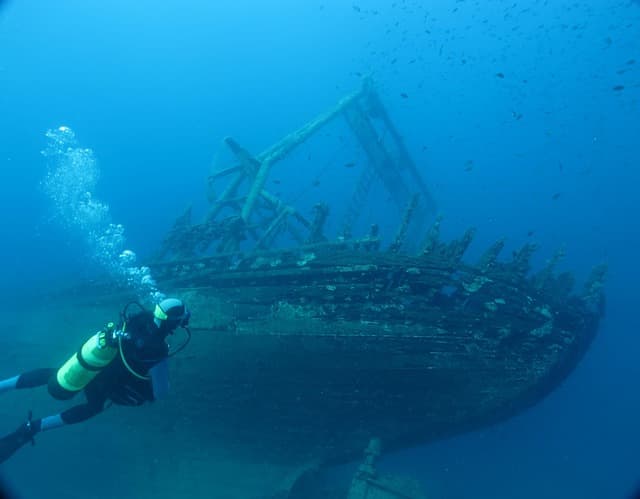 Image by Martin Str
A recreational wreck course is not a treasure-hunting licence and it is not technical overhead training. It teaches you to treat a wreck as a site with extra hazards: silt, entanglement, unstable metal, and — if you go inside — no direct ascent.
Typical academic topics:
- Types of wrecks (accidental, scuttled, aircraft)
- Site assessment and mapping
- Currents, mooring lines, and boat procedures
- Hazards: silt, sharp edges, collapse, net, fishing line
- Limited-visibility techniques
- Air planning, including the rule of thirds if you penetrate
- Legal and ethical rules: no souvenirs, respect for war graves
- Equipment: lights, reels, cutting tools, redundant air
In the water you practise hovering without silting, swimming the exterior, using a reel, and — depending on the agency and course level — a limited entry that stays in natural light.
What it does not certify you to do: swim beyond the light zone, pass restrictions, decompress inside a wreck, or dive Britannic-class depths. Those are technical or cave-style overhead programs.
PADI Wreck Diver: Prerequisites and Structure
PADI Wreck Diver is the course most recreational divers mean when they say “wreck specialty.”
Prerequisites. You must be at least 15 years old and certified as a PADI Adventure Diver or Advanced Open Water Diver, or hold a qualifying certification from another organisation at a similar level. Open Water alone is not enough. If you only have Open Water, complete Adventure Diver (three adventure dives) or full AOW first.
Dives. Four open-water wreck dives, usually over at least two days. An elective wreck dive from your Advanced Open Water course may count toward the specialty at the instructor’s discretion — ask before you book so you are not paying for a dive you already did.
Knowledge development. Manual or eLearning plus a Knowledge Review (typically in the 15–20 question range). There is not usually a separate 50-question final like Open Water. Instructors still expect you to understand the limits, not just tick boxes. Our PADI specialty exam prep guide explains how wreck reviews differ from Nitrox calculations.
Penetration limits. PADI’s recreational wreck penetration is tightly capped:
- Stay within the natural light zone (you can still see the glow of the entrance). No night penetration, and no murky wrecks where “light zone” does not exist.
- Maximum 40 metres / 130 feet linear distance from the surface — depth plus horizontal travel combined. Example: wreck on the sand at 30 metres means at most about 10 metres of inward travel. If the wreck is at 40 metres, you do not enter.
- Rule of thirds for gas: roughly one-third in, one-third out, one-third reserve. Penetration gas planning starts when you leave the surface, not when you duck through a hatch.
- Clear exit; avoid silty dead-ends and restrictions.
If the training wreck sits deeper than 18 metres, PADI recommends Deep Diver as well. That is practical, not snobbery: you are stacking overhead with depth.
What the four dives usually look like. Early dives are exterior: navigation, mapping, hazard ID, using a line outside. Later dives introduce limited penetration with a guideline. Exact sequence is in the instructor guide; the point is you do not start day one in an engine room.
SSI Wreck Diving and Advanced Wreck Diving
SSI splits what PADI puts in one specialty.
SSI Wreck Diving is a non-penetration program. You learn to dive around wrecks and artificial reefs, typically to a maximum training depth of 30 metres. Official facts from SSI include a minimum age of 10 (juniors stay within junior depth limits), Open Water Diver as the certification prerequisite, about six academic sessions, a final exam, and at least two open-water training dives. Suggested duration is on the order of 5–10 hours of program time, though shops stretch that across two days with boat schedules.
That course is for swimming the outside: buoyancy, navigation, wreck layout, using a reel as a tether or reference — not for going inside. Completing it does not make interior swim-throughs acceptable.
SSI Advanced Wreck Diving is the limited-penetration course. SSI describes it as training to independently plan no-decompression, limited-penetration dives in the daylight zone, to a maximum of 30 metres depth or 40 metres linear distance, with specialised overhead equipment and an equally qualified buddy. Typical published prerequisites:
- Minimum age 15
- Open Water Diver (or equivalent)
- Often 24 logged dives in the agency standards (some centres list a wreck specialty first; check the shop)
- Academic work, a dry-land line session, and additional open-water dives (commonly two to four depending how the centre packages Wreck + Advanced Wreck)
If you dive SSI and you want the same kind of permission PADI Wreck Diver gives for light-zone entry, you are looking at Advanced Wreck, not the two-dive exterior specialty.
Both SSI wreck programs remain recreational and no-decompression. Full dark-zone wreck, restrictions, and deco are SSI Extended Range / XR overhead, which is a different catalogue.
PADI vs SSI: What Actually Differs
Penetration. This is the decision that matters. PADI Wreck Diver includes limited light-zone penetration in one four-dive specialty. SSI Wreck Diving does not; SSI Advanced Wreck Diving does, with similar light-zone and ~40-metre linear ideas.
Prerequisites. PADI wants Adventure Diver or AOW and age 15. SSI’s exterior course can start from Open Water and a younger minimum age (with junior limits). SSI’s penetration course wants more logged dives and age 15.
Dive count. PADI: four wreck dives. SSI Wreck: at least two. SSI Advanced Wreck: additional dives on top, often packaged as a four-dive wreck track if you do both.
Depth. PADI wreck training still sits inside your recreational depth ratings (18 / 30 / 40 metres). SSI Wreck and Advanced Wreck training depths are commonly listed around 30 metres; going to 40 metres still wants Deep training regardless of logo.
Philosophy. PADI is highly standardised: same limits, same four-dive shape worldwide. SSI is modular: you can stop at exterior wreck skills, then add penetration later. Neither is “easier wreck diving.” The instructor and the wreck they use matter more than the card.
Cave contrast. Wreck overhead is not cave overhead. Caves have flow, silt of a different kind, and no “light zone hatch” you can swim back to in a straight line. If you are comparing overhead sports, read cave diving certifications with PADI and SSI. Do not treat wreck specialty as a shortcut into cavern or cave.
AOW Wreck Adventure Dive vs Full Specialty
Advanced Open Water includes two core adventure dives (Deep and Navigation) plus three electives. Wreck is a popular elective.
The AOW wreck adventure dive is a taste: briefing on hazards, usually an exterior circuit, maybe a map sketch. It is designed so a new Advanced diver can enjoy a wreck site without pretending they are a wreck specialist. Some skills overlap with the specialty’s first dive, which is why it can credit toward PADI Wreck Diver.
It does not:
- Qualify you for limited penetration
- Replace Knowledge Reviews for the full specialty
- Change your depth limit (that is still 30 metres for AOW, 18 for Open Water)
If you did a wreck adventure dive on holiday and later want the specialty, tell the instructor. You may save a dive. You will not skip the line-laying and penetration dives.
If your AOW wreck dive was a wide, lit swim-through that the instructor treated as open water, that still is not a habit to copy with a new buddy on a new wreck. Conditions and wreck layout change.
Equipment You Will Use on the Course
Expect to dive your normal kit, then add wreck-specific items the centre provides or asks you to bring.
- Primary and backup lights. Recreational penetration is defined partly by seeing the entrance glow; you still need a torch to look at the wreck and a backup if the primary dies.
- Wreck reel / line. You will practise deploying, following, and recovering a guideline. Tangled reels are a skill problem, not a gear brand problem.
- Cutting tool. Shears or a line cutter you can reach. Many wrecks are draped in net.
- Gloves. Useful on metal; some marine parks restrict them — follow local rules.
- Slate or wet notes. Mapping is part of PADI’s course for a reason: next time you dive that wreck, you should know the layout.
Pony bottles and full redundant rigs show up more in technical wreck classes. Recreational courses discuss when extra gas is wise; they do not turn you into a cave-configured diver in two days.
If you are buying kit, start with a good cutter and a light you can operate in thick gloves. A reel without instruction is how lines get wrapped around the wreck and around people.
Cost, Time, and How to Prepare
Cost. Recreational wreck specialties in Europe and the Red Sea often land around €250–€450 for tuition, including some boat dives, but the spread is huge. Remote destinations, private courses, and centres that include extra gas or technical-ish kit run higher. Manuals, certification fees, extra boat supplements, and Deep Diver add-ons are often extra. Treat online “from €199” prices as a starting quote, not a promise.
SSI’s two-dive exterior course can be cheaper than PADI’s four-dive wreck specialty simply because there are fewer boat slots. Combining SSI Wreck + Advanced Wreck can land in a similar band to PADI Wreck Diver.
Time. Two days is typical if weather and the wreck cooperate. Four dives plus academics do not fit into a single morning. Build a weather day on liveaboards and in places like Scapa or Malta in winter.
Preparation.
- Be honest about buoyancy. If you cannot hover, you will silt the wreck and the instructor will (correctly) keep you outside.
- Read the manual before the Knowledge Review. Wreck exams are conceptual: limits, hazards, thirds — not Nitrox maths.
- Practise on a Basic Wrecks quiz so the vocabulary (light zone, linear distance, guideline) is not new in the briefing.
- If the wreck is deeper than 18 metres, consider Deep first or at least know your depth limits.
- Medical questionnaire still applies. Overhead is a bad place to discover an ear that will not equalise.
Do not book a “penetration workshop” with no agency standards. The value of PADI or SSI is the published limits, not the logo on a T-shirt.
Final Thoughts
Wreck diving certification is worth taking if you will dive wrecks more than once, or if you want a clear, trained answer to “can I go in?” For PADI, that answer is Wreck Diver: Adventure Diver or AOW, age 15, four dives, light zone, 40-metre linear cap. For SSI, the exterior Wreck Diving specialty and Advanced Wreck Diving are two steps; only the second is limited penetration.
An AOW wreck adventure dive is a useful introduction. It is not the specialty. Cave training is a different overhead path. And no card allows souvenir hunting or casual war-grave interior tours.
If wrecks are the reason you are diving this year, get the training before the famous name on the itinerary. Then pick sites that match the card you actually hold.
Frequently Asked Questions
- What are the PADI Wreck Diver prerequisites?
- You must be at least 15 and hold PADI Adventure Diver or Advanced Open Water (or a qualifying equivalent). Open Water alone is not enough. The course is four open-water wreck dives, usually over at least two days, plus knowledge development.
- Can I go inside a wreck after the AOW wreck adventure dive?
- No. The Advanced Open Water wreck adventure dive is an introduction, usually on the exterior. It is not a penetration qualification. Limited light-zone entry requires PADI Wreck Diver or SSI Advanced Wreck Diving (or equivalent technical overhead training).
- How much does wreck diving certification cost?
- Typical recreational specialties in Europe and the Red Sea often fall around €250–€450, but the range is wide. Boat supplements, manuals, Deep Diver add-ons, and private courses can push the price up. Get a written quote that lists how many dives are included.
- PADI vs SSI wreck diving — which should I take?
- If you want limited penetration in one recreational specialty, PADI Wreck Diver includes it. SSI Wreck Diving is non-penetration; SSI Advanced Wreck Diving is the light-zone penetration course. Choose the instructor and the wreck they use as much as the agency logo.
- Is wreck diving certification the same as cave diving?
- No. Both are overhead environments, but caves have different flow, silt, and navigation problems. A wreck specialty does not qualify you for cavern or cave. See cave diving certifications with PADI and SSI if that is the path you want.
- How far can I penetrate after PADI Wreck Diver?
- Stay in the natural light zone and within about 40 metres linear distance from the surface (depth plus horizontal travel). If the wreck sits at 30 m, you only have a short inward distance. At 40 m you should not enter. Dark-zone wreck diving is technical training.
Related articles
- Wreck Diving: Complete Wreck Diver Guide, Training & Best Sites
What is wreck diving and how do you become a wreck diver? Learn exterior vs penetration rules, PADI/SSI courses, essential wreck gear, and where to start.
- Malta Wreck Diving: Best Shipwrecks in Malta & Gozo by Depth
Explore the best Malta wreck diving sites across Malta, Gozo, and Comino: from 14m Open Water shore wrecks like HMS Maori to P29, Um El Faroud, and Karwela.
- From Open Water to Nitrox and Wreck: How to Prepare for PADI Specialty Exams
PADI specialty courses like Advanced Open Water, Enriched Air (Nitrox), Wreck Diver, and Peak Performance Buoyancy all have exams. Learn what each covers and how to prepare with free practice quizzes.
- Advanced Open Water Diver Certification: Complete Guide to Deeper Diving
The PADI Advanced Open Water Diver certification strenghten your diving skills and allows you to explore deeper dive sites (30m/100ft). You must have completed the Open Water Diver certification first.
- Cave Diving Certifications With PADI and SSI
Learn how PADI and SSI cave diving certifications compare in terms of training structure, required dives, costs, and which path may suit you best.