Diving the Dahab Blue Hole: Safety and the Arch
Explore the Red Sea's most legendary sinkhole. Read about diving the Dahab Blue Hole in safely.
Diving the Dahab Blue Hole
Dahab Blue Hole is probably one of the most iconic and yet not overcrowded diving places in Egypt. Located on the edge of the Sinai Desert in Egypt, this 120-meter deep submarine sinkhole is just a step away from the shore.
This sinkhole is particularly interesting because despite extending just over 70 m horizontally, it has a vertical drop of over a hundred meters. These allow for a multitude of routes for divers, free divers and technical divers.
Here is more about diving in Dahab.
The Layout of the Hole
The Blue Hole is a vertical shaft that drops almost instantly from the shore. It is separated from the open sea by a saddle at 7 meters and a massive tunnel known as 'The Arch' at a depth of 52 meters.
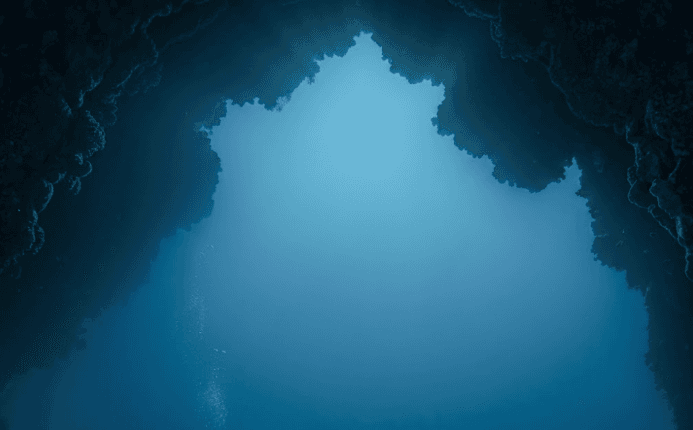 Image by The Arch, Dahab Blue Hole
The Standard Route: The Bells to Blue Hole
The most famous way to dive the site is to start a few hundred meters north at The Bells. This is a narrow chimney in the reef that you descend vertically through, exiting onto a stunning wall at about 25 meters.
From there, you keep the wall on your right shoulder and drift along a sheer vertical drop-off covered in elephant ear corals and massive gorgonians. Eventually, you cross over the 7-meter saddle and enter the calm, blue waters of the Blue Hole itself to finish your safety stop.
The Myth of the 'World's Most Dangerous Dive Site'
You may have seen documentaries calling the Blue Hole the "Diver's Cemetery." It is important to separate fact from fiction.
- Is it dangerous for recreational divers? No. As long as you stay within the PADI recreational limits (max 30m or 40m depending on your Advanced certification), the Blue Hole is a very easy, current-free, and incredibly clear dive.
- Why the bad reputation? The tragedies associated with the Blue Hole are almost exclusively linked to The Arch. The Arch is a 26-meter long tunnel that connects the hole to the open ocean. Because the top of the Arch is at 52 meters, it is strictly out of bounds for recreational diving.
Divers who attempt to swim through the Arch without technical training, specialized gas mixes (like Trimix), and redundant equipment often fall victim to Nitrogen Narcosis and oxygen toxicity.
What You Will See
- The Deep Blue: Looking down into the center of the hole is a surreal experience; the water is an intense, bottomless indigo.
- The Walls: The outer wall (The Bells) is far more vibrant than the inner walls of the hole. Expect colorful soft corals, anemonefish, and the occasional turtle.
- The Monument: On the shore overlooking the hole, there is a series of plaques dedicated to those who lost their lives. It serves as a somber reminder to respect the sea and your training limits.
Important Safety Tips
- Diving with a Guide: Even if you are an experienced diver, you should always dive the Blue Hole with a local Dahab dive club guide who understands the conditions and the entry/exit points.
- Monitor Your Depth: Because the water is so clear and the bottom is so deep, it is very easy to descend deeper than you intended. Keep a close eye on your computer.
- Respect the Limits: Never, under any circumstances, attempt to dive the Arch unless you are a certified Technical Diver on a planned deco-stop mission with a qualified tech-diving center.
Final Thoughts
Diving the Blue Hole is a highlight of any Red Sea trip. It offers a sense of scale and a purity of 'blue' that few other sites can match. By respecting the depth limits and enjoying the shallow beauty of the walls, you can experience this wonders of the world safely and memorably.
Related articles
- Diving The Canyon in Dahab: A Surreal Deep Experience
Descend into one of Dahab's most iconic geological wonders. A guide to diving The Canyon, its light effects, and what advanced divers can expect.
- Diving in Dahab: Beyond the Legendary Blue Hole
Experience the ultimate shore diving destination. From the legendary Blue Hole to the surreal Canyon, discover our complete guide to scuba diving in Dahab.
- Sharm El-Sheikh vs Dahab Diving: Which Red Sea Base Wins?
Comparing Sharm El-Sheikh vs Dahab diving? See how boat diving at Ras Mohammed and Tiran compares with Dahab shore dives, the Blue Hole, and 2026 prices.
- Diving Ras Abu Galum: The Camel Trek Dive Adventure
Looking for the ultimate off-the-beaten-path dive experience? Discover Ras Abu Galum, where you trek by camel to reach pristine, untouched coral reefs.